Design your own ring
Step 1: Choose a metal
The First step in making a custom jewelry peace is to choose the precious metal! Not only does this determine the color of your piece, but also the durability, maintenance requirements, and cost.
Gold: Gold is, as they say the "gold standard" for jewelry. It is a favorite of consumers and jewelers alike. It is easy to work with which allows fine detailed designs. It is a shiny hypoallergenic metal that will look great for hundreds of years with minimal maintenance cleaning. Many gold alloys have been developed over the years to make gold in a variety of colors to suit your fashion. Yellow gold is the most widely used alloy, after all, it is the gold that looks gold. Other colors such as white, rose, and green gold are also available. Gold is chemically inert meaning it will never rust or oxidize and will stay gold forever!
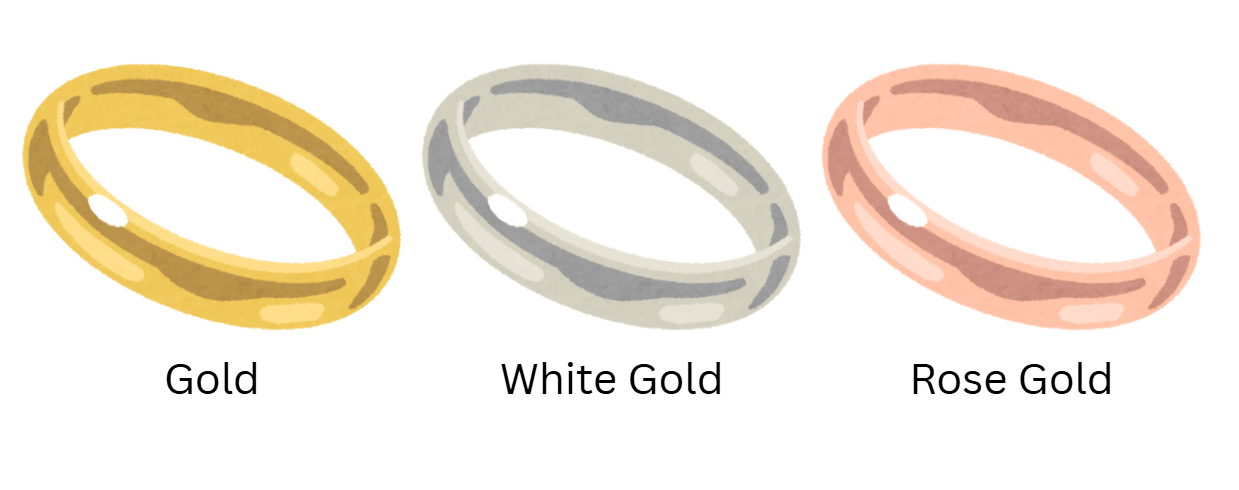
Karat: When choosing gold, you will need to choose the gold purity or "karat". Karat is the ratio of gold to other metals in a gold alloy. It is measured out of 24 parts. So, for example, 14k gold is 14/24 parts gold or in other words about 58% gold. 24k gold is pure gold, it is beautiful but too soft to make jewelry. The remaining portion is the alloy metals that modify color and durability. Common karat choices are 10k, 14k, and sometimes 18k for someone looking for a particularly rich gold color. The higher the karat the deeper the gold color, however it is softer and therefore less durable. In today’s jewelry 10k is most common for men’s jewelry for its increased durability and 14k is most common for women’s because of the richer gold color! Choose what suits you! The higher karat alloys are also more expensive since the gold content is higher.
Yellow Gold: Yellow gold is the traditional gold look and supports beautiful designs. Most commonly in 10k and 14k but for the truly rich gold luster you can go all the way up to 18k. Keep in mind that lower karats do offer more durability but less gold color.
White gold: White gold is not truly white, but rather mostly white with a yellow undertone. Often times white gold is plated with rhodium, a brilliant white metal, to give it a purer white color. White gold is usually only done in 10k or 14k with 10k having the whiter color. If your white gold is rhodium plated, the rhodium will eventually wear off, as a maintenance procedure you will need to have your jewelry replated when needed, this could be as often as every couple years if you are hard on your jewelry. You might want to note that white gold contains some nickel, some people are allergic to nickel, if you have a nickel allergy you might want to stay away from white gold. If you insist on white gold and have a nickel allergy, make sure your white gold is rhodium plated.
Rose Gold: Rose Gold gets color from a practically high copper content in the alloy. We primarily work with 10k rose (as it has a deeper rose color), but 14k is also an option! Rose gold tends to be very scratch resistant compared to other golds and also a bit harder work fine details into the design.
Silver: You can’t get a more brilliant white color than polished silver! It is a much cheaper option than gold, but doesn’t quite have the same durability. Silver, although a brilliant white color tends to oxidize rather rapidly requiring frequent polishing to keep in tip top shape. It also isn’t quite as hard as alloyed gold, meaning it will scratch easier and wear faster.
Step 2: Stone Shape and size
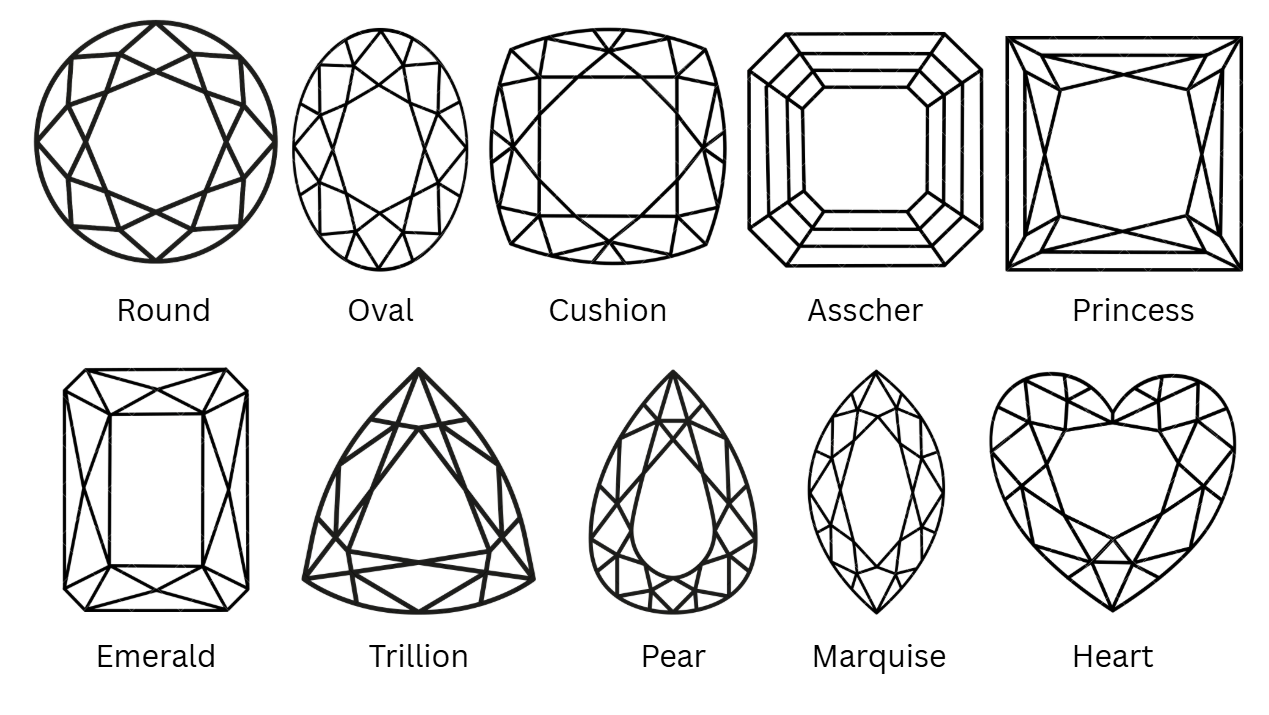
Find out what stone shape will work best for you. It may be round or princess cut.
Step 3: Stone material
Diamonds are by far the most common stone chosen for a special ring. They are beautiful and durable. However, there are a number of other stones which can create magnificent ring. Moissanites are cheaper and sparkle more.
Step 4:Design elements
flower? or knots
Step 5:Meet with the jeweler
Meet with a jeweler and/or design team to make you jewelry piece come to life.
Pricing
The jeweler will help determine the price